Boston Scientific
A UX/UI design case study a medical procedure controller, ensuring precision, safety, and clarity in a high-stakes clinical environment. Timeline: May 2023 – September 2023 (5 months) My Role: External UI Design Consultant Client: Boston Scientific Engagement Type: Independent design consultancy for UI design and delivery, following completed UX research
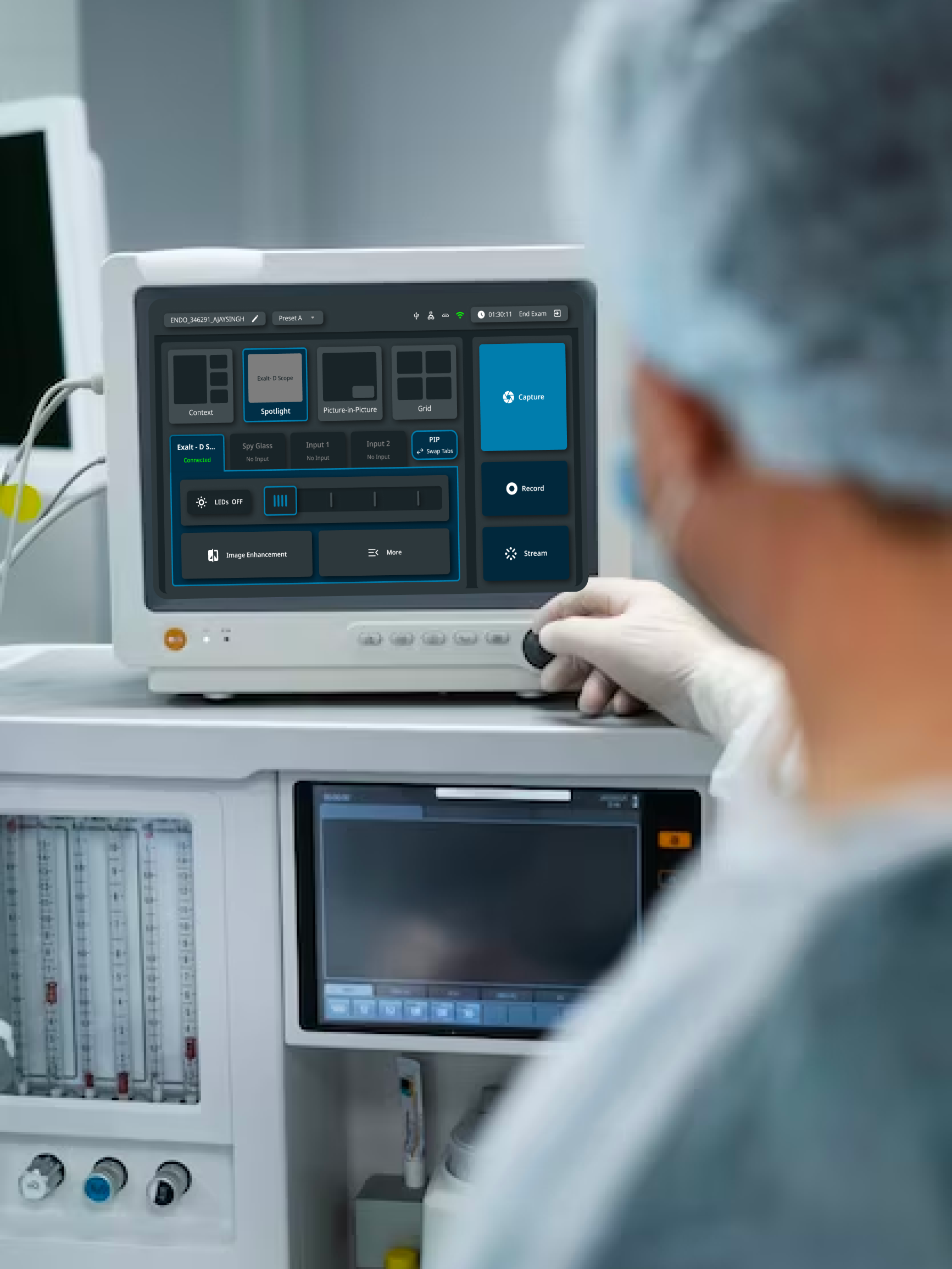
About Boston Scientific
Boston Scientific is a global medical technology company headquartered in Marlborough, Massachusetts, USA. Specializing in the development and manufacturing of diverse medical devices, Boston Scientific advances patient care in cardiology, endoscopy, urology, and neuromodulation.
The Design Challenge
In today's medical landscape, time constraints for physicians and technicians necessitate unwavering focus on tasks without unnecessary distractions. Critical priorities include:
Efficient procedure completion with accuracy
Seamless image capture, recording, and documentation
Video input comparison and image enhancement
System integration across multiple devices
Optimal performance in low-light environments
The Versatile Controller needed to address these challenges by enabling input of multiple scopes and devices while facilitating integration of diverse views to enhance overall workflow.
My Role as External UI Design Consultant
Boston Scientific engaged me as an independent consultant specifically for UI design and delivery after their internal UX research phase was completed. My mandate was clear: translate their research findings into a comprehensive, production-ready design system and interface designs for internal development.
Project Handoff Context
What I Received:
Completed UX research findings from global discovery (India, UK, Germany, US)
User personas, journey maps, and workflow documentation
Information architecture and user flow specifications
Device integration requirements and technical constraints
Boston Scientific's existing brand guidelines and design standards
My Deliverable Scope:
Complete visual design system (tokens, components, patterns)
High-fidelity interface designs for all key user flows
Multi-language interface variants (English, German, Japanese)
Comprehensive design documentation for development handoff
Style guide and component library specifications
Design Process: Research to UI Translation
Our comprehensive design approach followed a structured methodology adapted for medical device constraints:
1. Research & Discovery
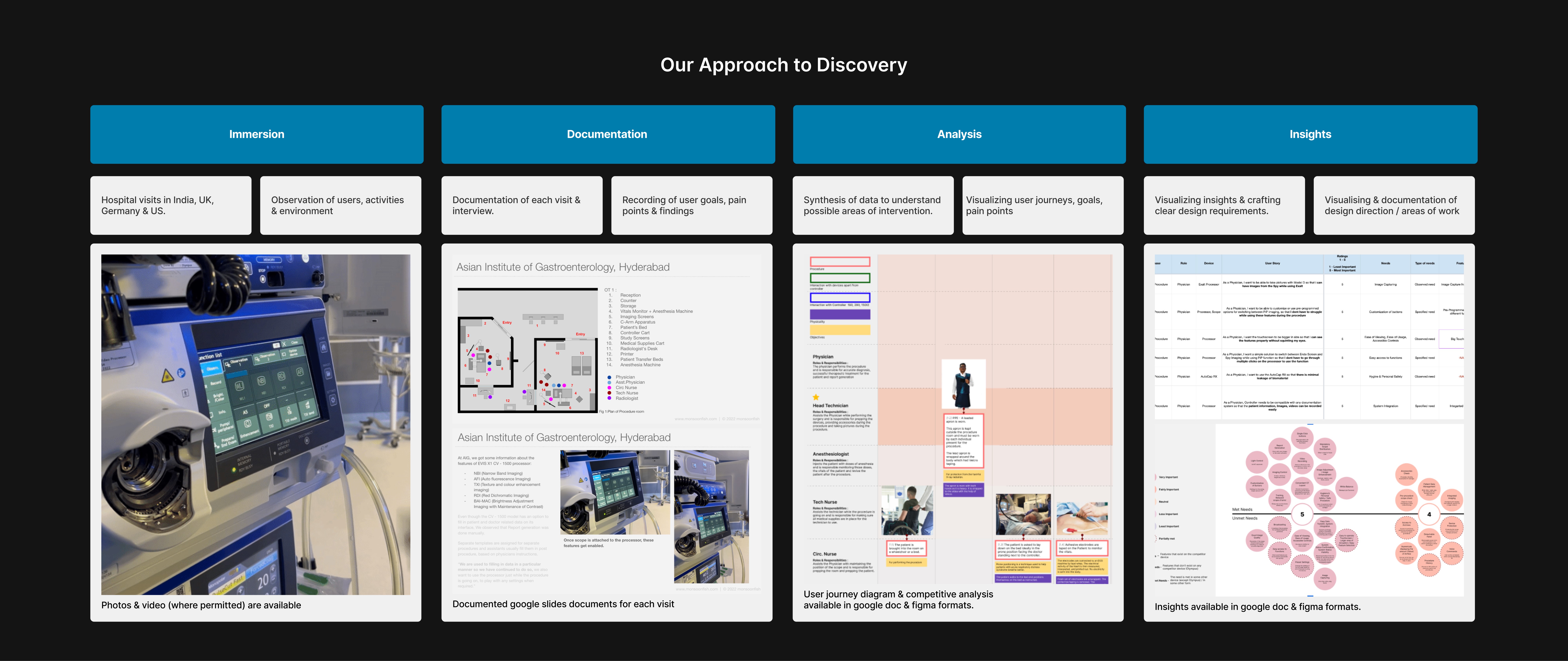
Research Analysis (May 2023)
UX Research Integration: Synthesized global user research findings from clinical environments in India, UK, Germany, and Japan
User Persona Deep Dive: Analyzed healthcare professional workflows, pain points, and procedural requirements
Technical Constraint Mapping: Documented hardware limitations, regulatory requirements, and development constraints
Competitive Analysis: Evaluated existing medical device interfaces and industry best practices
Stakeholder Alignment
Requirements Gathering: Collaborated with Boston Scientific teams to understand business objectives and technical specifications
Regulatory Review: Studied IEC/FDA requirements for medical device interface design
Brand Analysis: Analyzed existing Boston Scientific design language and visual identity
2. Information Architecture & User Flow
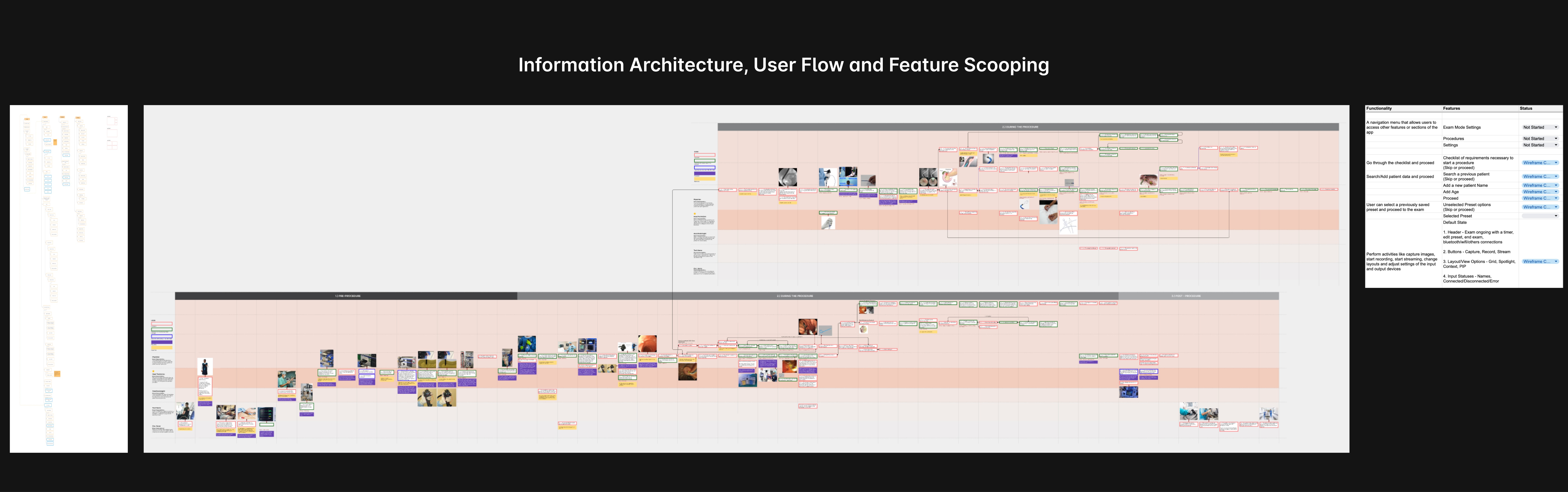
Workflow Mapping (June 2023)
Procedure Flow Analysis: Mapped complex medical workflows including ERCP and cholangioscopy procedures
Information Hierarchy: Structured interface layers for exam modes, device controls, and documentation
Navigation Architecture: Designed multi-level navigation supporting different user roles and procedure types
Feature Prioritization: Organized functionality based on critical vs. secondary user needs
Wireframe Development
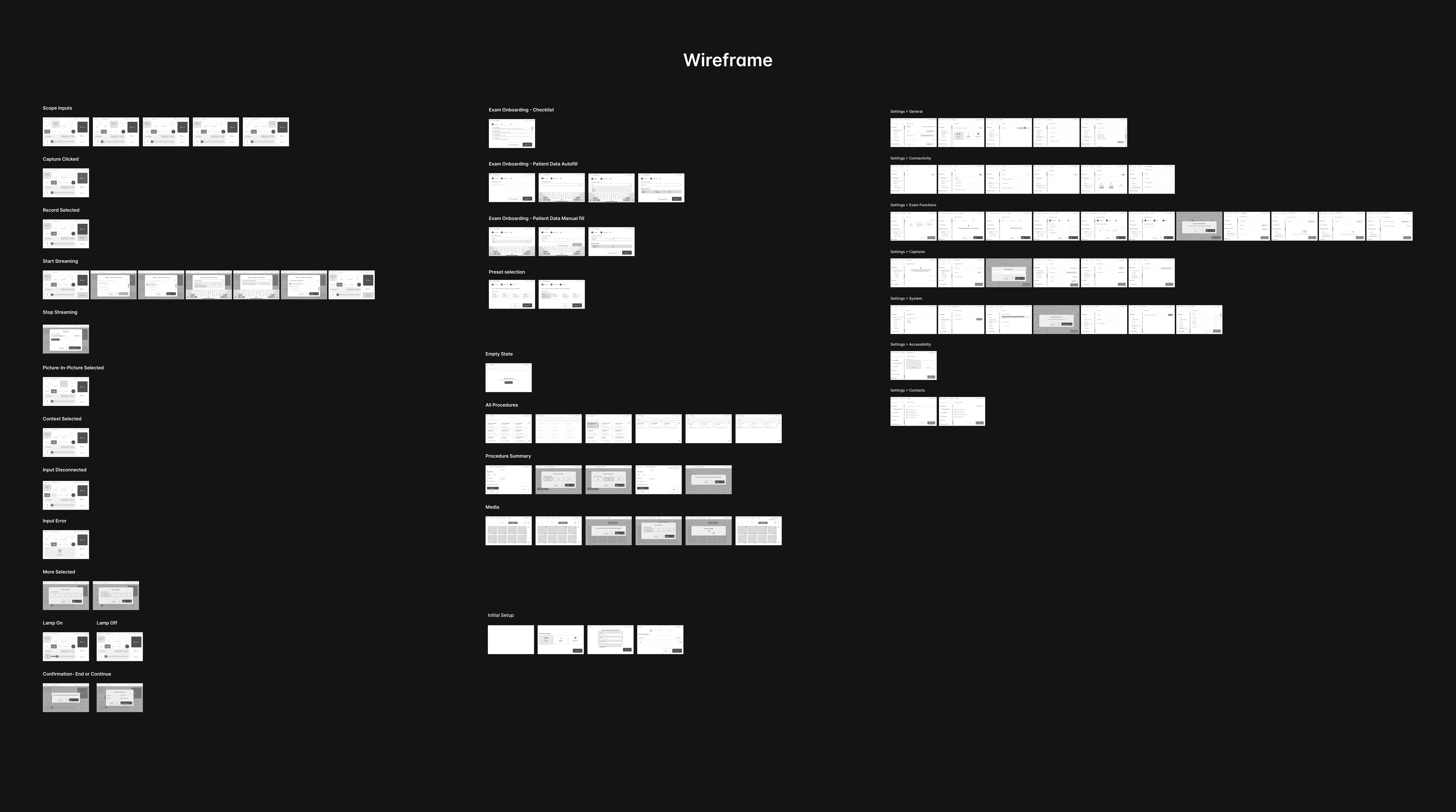
Low-Fidelity Structure: Created wireframes for Setting Up, Final Exam Mode, and Procedures sections
Component Mapping: Identified reusable UI patterns across different procedure workflows
Layout Optimization: Designed for touch interfaces with medical glove compatibility
Multi-Device Planning: Ensured wireframes work across various screen sizes and orientations
3. Design System Development
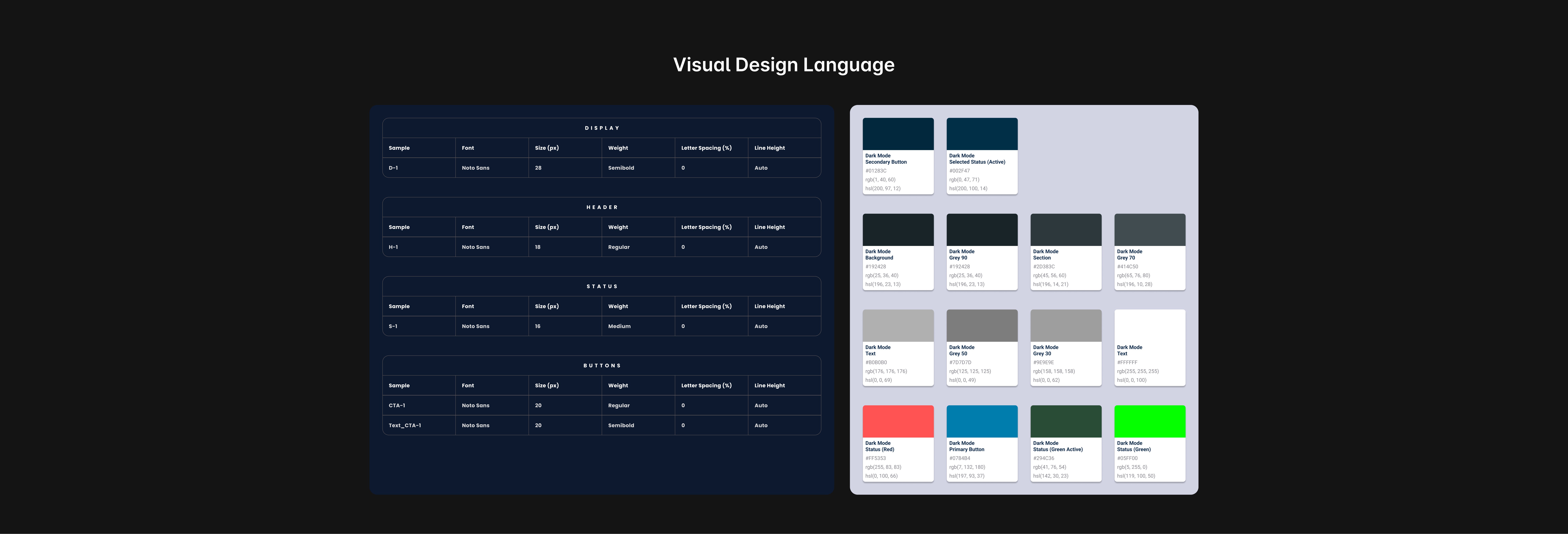
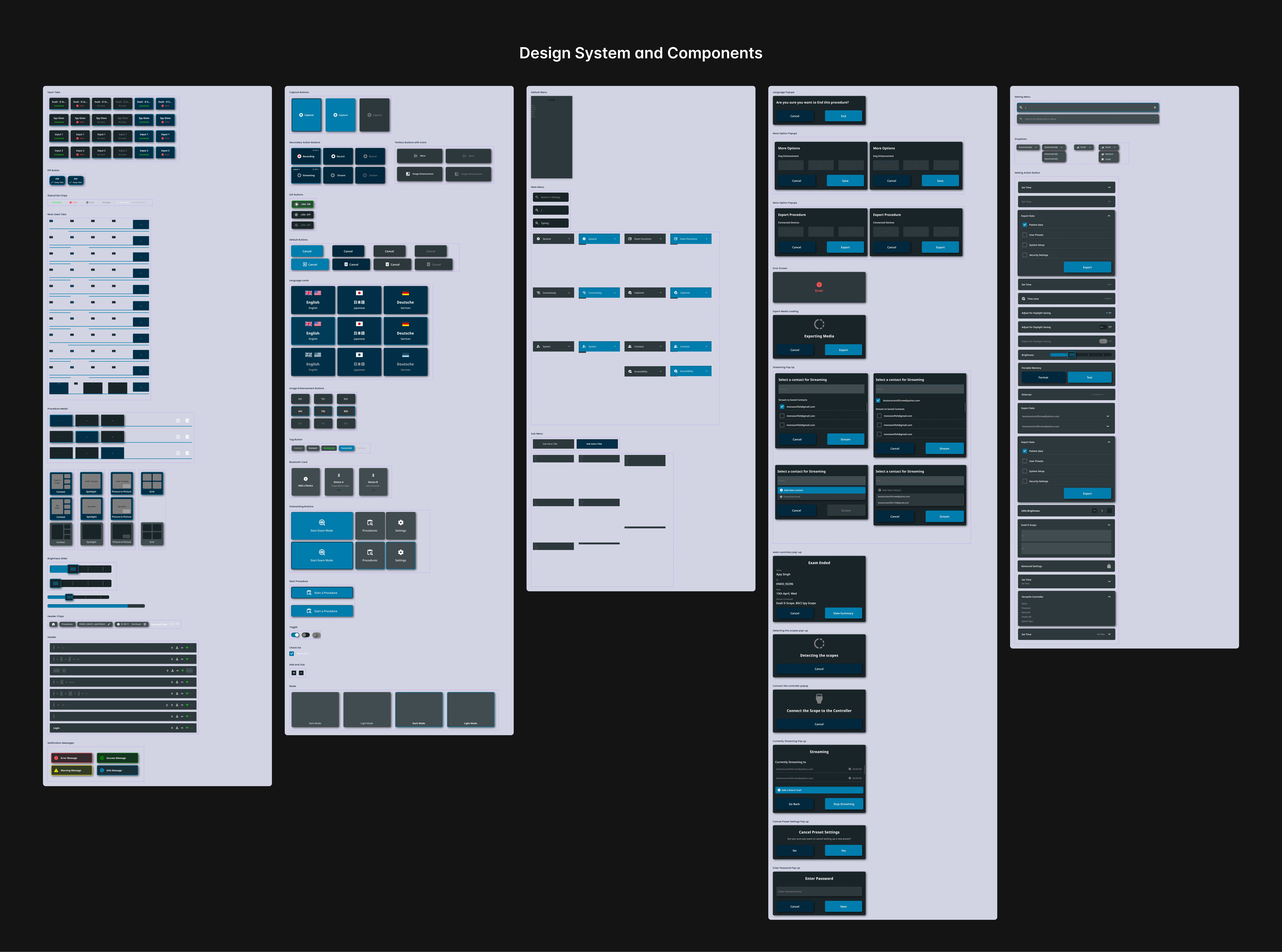
Foundation Building (June - July 2023)
Medical-Grade Color System: Developed hardware-safe color palette validated against 8-bit LCD displays
Typography Scale: Created readable text hierarchy optimized for medical device viewing distances
Spacing & Grid System: Established touch-optimized measurements following medical device standards
Iconography Development: Designed 60+ medical procedure icons optimized for low-resolution displays
Component Architecture
Base Components: Form controls, buttons, navigation elements with medical-specific requirements
Complex Components: Procedure timers, device status indicators, real-time monitoring widgets
State Management: Defined interaction states (default, hover, active, disabled, error, critical)
Accessibility Integration: Built-in color blindness support and high-contrast ratios
4. Visual Design & Prototyping
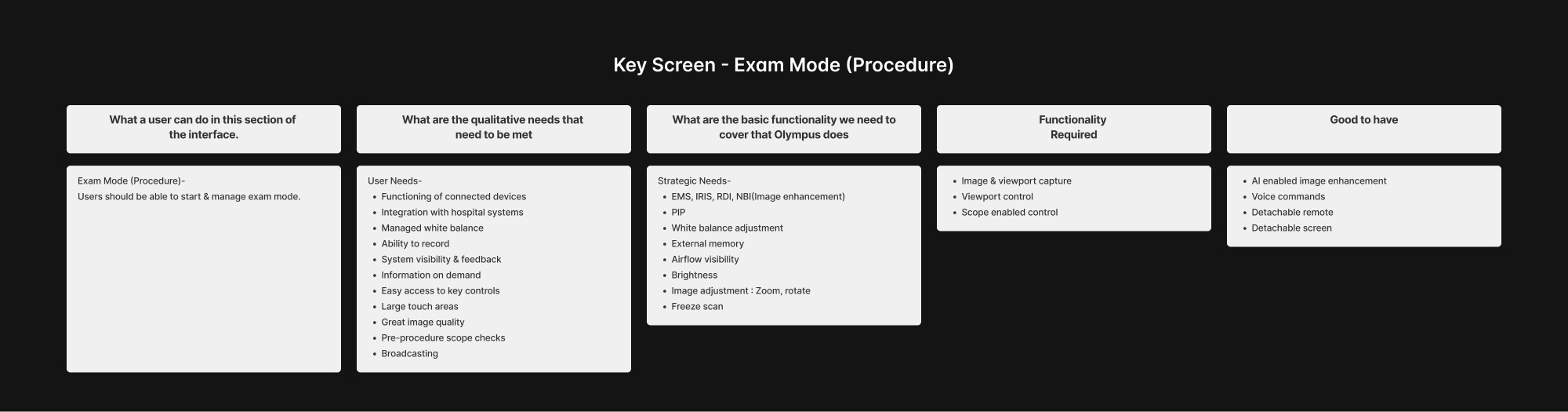
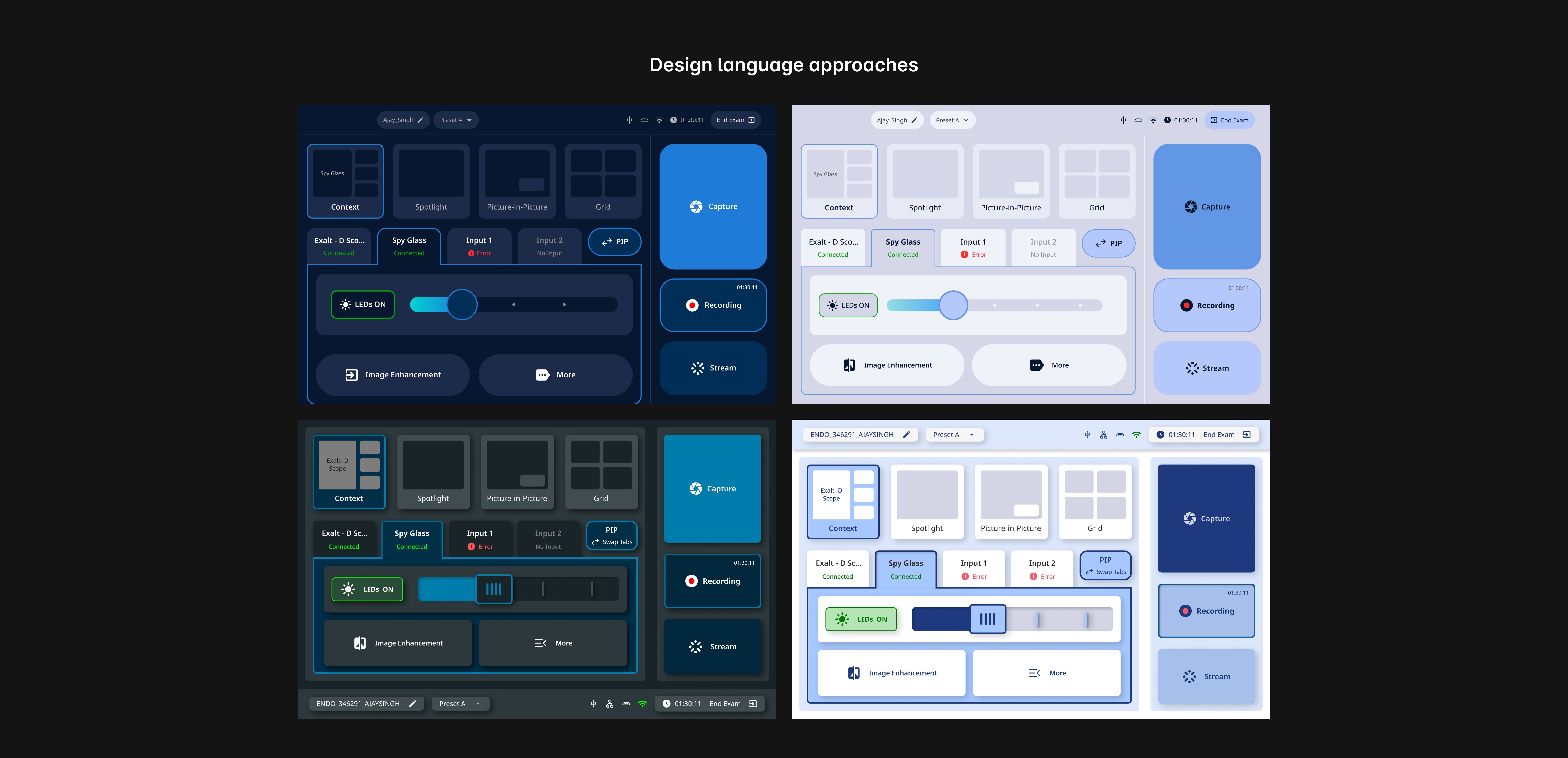
Interface Design (July - August 2023)
Key Screen Design: Focused on Exam Mode interfaces with critical procedure controls
Multi-Language Variants: Created culturally-adapted versions for English, German, and Japanese markets
Device-Specific Optimization: Designed interfaces for various medical device screen types and resolutions
Regulatory Compliance: Ensured all visual elements met IEC/FDA medical device standards
Interactive Prototyping
Workflow Validation: Created clickable prototypes demonstrating key user journeys
Stakeholder Reviews: Facilitated design reviews with Boston Scientific teams and medical professionals
Iteration Cycles: Refined designs based on feedback and technical constraint discoveries
Accessibility Testing: Validated color blindness compatibility and contrast ratios
5. Documentation & Handoff
Design System Documentation (August - September 2023)
Component Library: Comprehensive specifications for all 45+ UI components
Design Token Documentation: Complete variable system covering colors, typography, spacing, and effects
Usage Guidelines: Detailed instructions for component implementation and customization
Accessibility Standards: Documentation of compliance requirements and testing procedures
Development Handoff
Asset Organization: Structured file delivery optimized for development team workflow
Technical Specifications: Detailed measurements, code snippets, and implementation notes
Quality Assurance: Created testing checklist for design implementation validation
Knowledge Transfer: Conducted handoff sessions with internal development team
6. Multi-Language Adaptation
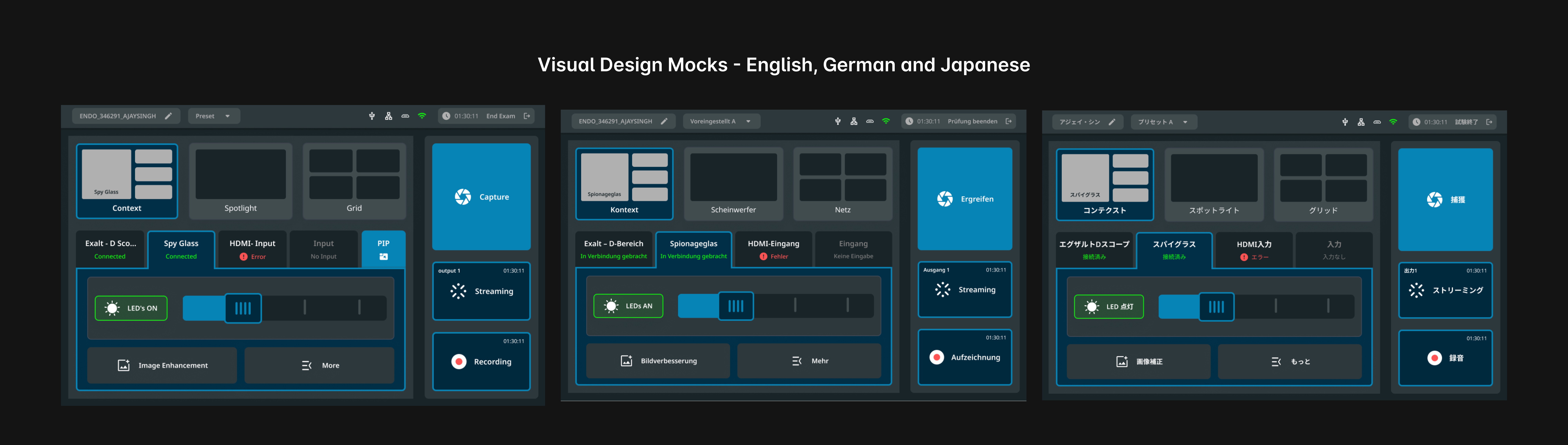
Cultural Design Considerations
English Version: Primary interface with medical terminology and Western UI patterns
German Version: Localized for European medical standards with German medical terminology
Japanese Version: Adapted for Japanese healthcare workflows with appropriate character encoding
Technical Localization
Text Length Optimization: Adjusted layouts for different language text expansion ratios
Character Encoding: Ensured proper font support for international character sets
Cultural UI Patterns: Adapted interaction patterns for different regional preferences
Regulatory Variations: Accommodated different medical device standards across global markets
Medical Device UI Complexity
The extended timeline was necessary because medical device interfaces require extraordinary precision:
Regulatory Compliance: Each UI element needed validation against medical device design standards Safety-Critical Design: Error states and feedback systems required multiple refinement cycles Multi-Device Integration: Interfaces needed seamless compatibility across various medical equipment Clinical Environment Optimization: Every visual element tested for low-light, sterile environment performance
Independent Consultant Advantages
Working as an external consultant allowed for:
Uninterrupted focus on design system development without internal meeting overhead
Objective perspective on design decisions based purely on research findings and best practices
Efficient iteration cycles without navigating internal approval processes during design development
Comprehensive documentation necessary for successful handoff to internal development teams
Key Learnings as External UI Design Consultant
Post-Research Design Efficiency: Starting with completed UX research allowed for focused, efficient UI development without the complexity of parallel research integration
Medical Device UI Constraints: Unlike consumer apps, medical device interfaces are constrained by hardware limitations (8-bit LCD displays), development restrictions (fixed color palettes), and regulatory requirements (IEC/FDA color standards) that fundamentally shape design possibilities
Brand Evolution Strategy: Successfully enhanced Boston Scientific's existing design language for new medical contexts while maintaining brand integrity and recognition
Independent Consultant Value: External consultation provided objective design perspective and dedicated focus without internal resource conflicts or competing priorities
Comprehensive Documentation Importance: As an external consultant, creating detailed design documentation was crucial for successful knowledge transfer to internal development teams
Medical Device Compliance: Understanding regulatory requirements and medical environment constraints was essential for creating interfaces that meet both user needs and industry standards
Professional Growth: This engagement reinforced the value of specialized medical device UI expertise and the effectiveness of focused, independent design consultation. The 5-month timeline allowed for methodical design system development that resulted in production-ready deliverables with comprehensive documentation for seamless internal implementation.
This case study demonstrates the effectiveness of specialized external design consultation for complex medical device projects, showcasing how focused expertise and methodical approach can deliver comprehensive design solutions that meet both user needs and business implementation requirements.
Note on Metrics & Data Access
As an external UI design consultant for this project, I joined after Boston Scientific had completed the UX research phase. My role was to translate their research findings into a comprehensive design system and production-ready interface for a remote medical procedure controller. All device development, coding, and hardware engineering were handled by Boston Scientific’s internal teams. I worked independently on the design delivery and did not have access to internal teams, implementation processes, or post-launch analytics. This case study focuses on my independent UI design process, methodology, and the qualitative design decisions made to meet the needs identified in the prior UX research.